What Is Cortisol? A Plain-English Guide to Your Stress Hormone
Cortisol is not the villain wellness culture makes it out to be. Here is what it actually does, what a healthy daily rhythm looks like, and the everyday habits that push it off course.
Exhausted all day, then wide awake at bedtime. If that sounds familiar, your evenings may be sending your body the wrong signals. Here is how to change them.
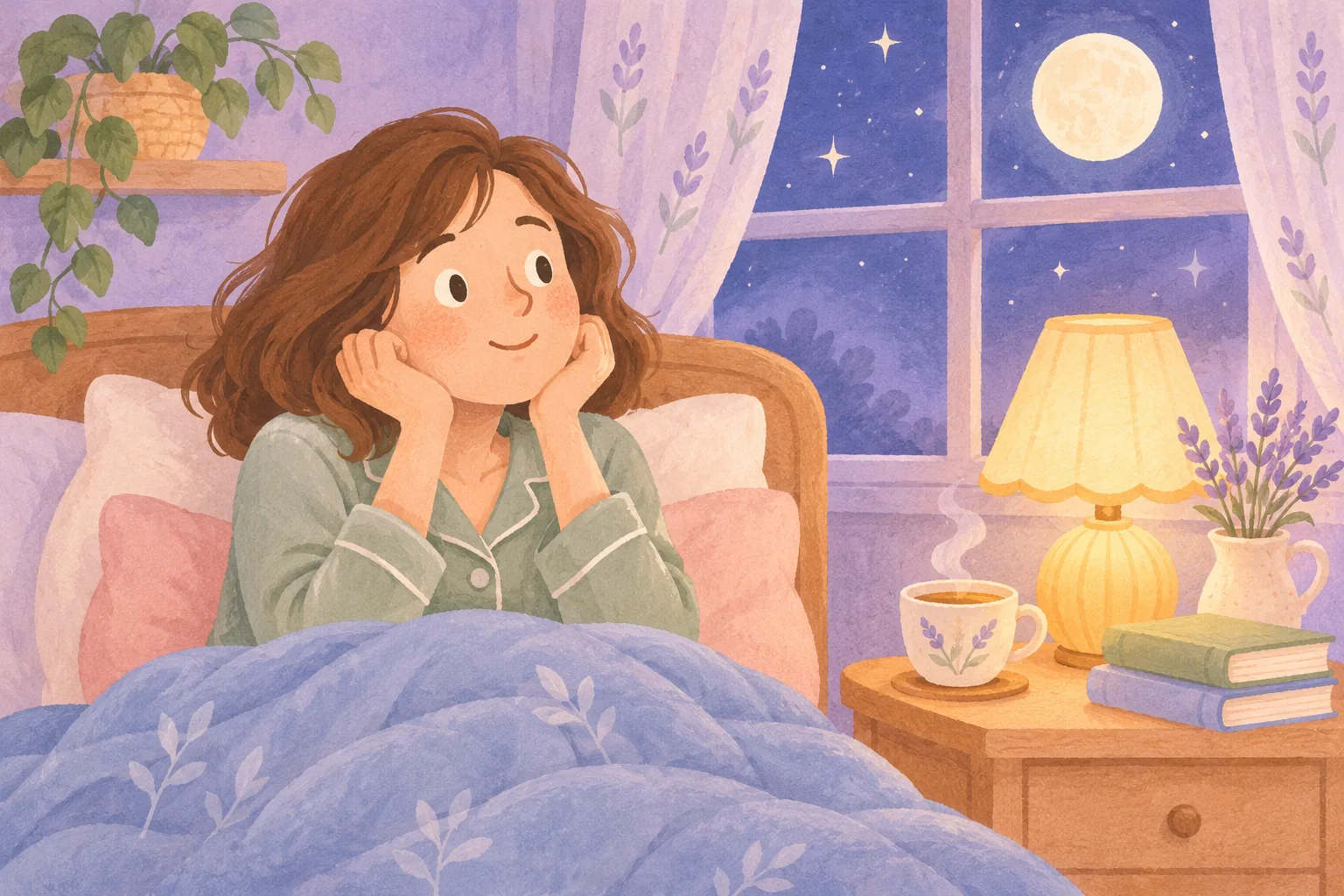
You drag yourself through the afternoon, promise yourself an early night, and then, at 10:30 PM, your brain switches on. You replay conversations, plan tomorrow, scroll. Sleep feels very far away.
That "wired but tired" feeling is one of the most common things we hear about. It is rarely about willpower. Usually your stress and alertness systems are running on a schedule that has drifted later than the life you are trying to live.
Alertness is not only about how long you have been awake. It is also shaped by your body clock and by the signals you send it. A day with very little morning light, followed by an evening full of bright screens, work messages and late food, can push your sense of night later and later. Stress adds to it: when your nervous system has not had a chance to settle, it stays on alert just when you want it to stand down.
It sounds backwards, but one of the best fixes for a late night is an early morning signal. Get daylight within the first hour of waking, even for ten minutes. Morning light is one of the strongest cues your clock uses to decide when evening should arrive.

A drifted rhythm usually moves back gradually, over days to a couple of weeks, not overnight. Keep your wake-up time steady, even at weekends, and let bedtime follow. Our sleep hygiene checklist has more ideas for the bedroom itself, and the 20-minute evening routine gives you a simple order to follow.
If you lie awake on several nights a week for months, or snore loudly and wake unrefreshed, speak to your doctor. Insomnia and sleep apnea are common and treatable.
The PM Protocol in The 14-Day Cortisol Protocol turns these steps into a printable evening checklist.
For education only. This content does not provide a diagnosis or replace care from a qualified healthcare professional. About Vital Life Journal & Our Content
 Hormones
Cortisol is not the villain wellness culture makes it out to be. Here is what it actually does, what a healthy daily rhythm looks like, and the everyday habits that push it off course.
 Hormones
Your body moves through three stages when stress keeps going: alarm, resistance and exhaustion. Here is what happens in each, what it means for cortisol, and how to move back toward recovery.
 Wellness
Exhausted but unable to switch off, jumpy at small noises, restless at night? Here is what hyperarousal is, why it happens and how to help your body stand down.