Wired but Tired at Night? How to Calm a Stress Rhythm That Runs Late
Exhausted all day, then wide awake at bedtime. If that sounds familiar, your evenings may be sending your body the wrong signals. Here is how to change them.
You do not need a ninety-step night-time ritual. Four small steps, done in the same order most nights, teach your body that the day is over.
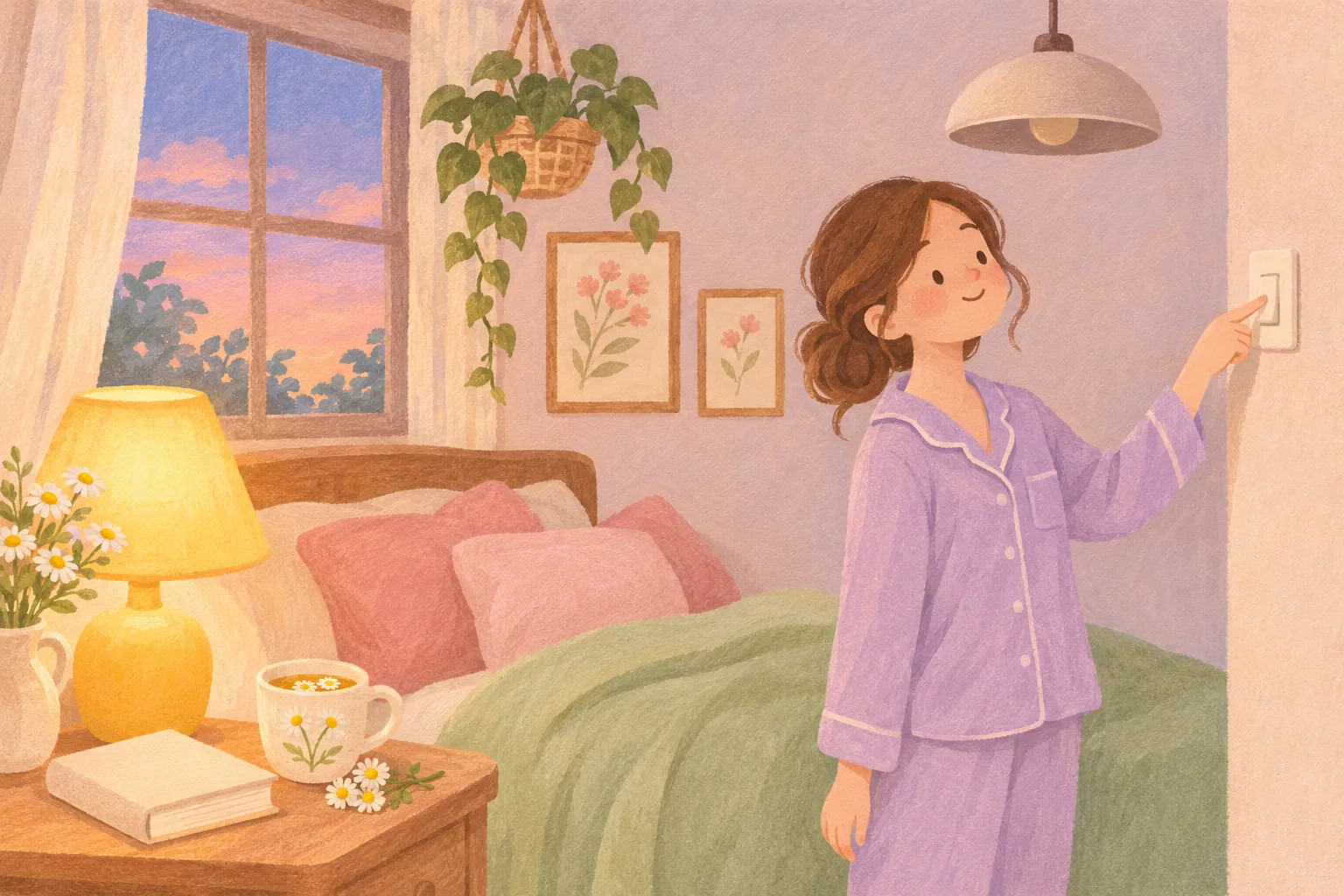
A consistent sleep schedule, quiet time before bed and a cool, dark bedroom can support sleep. Avoid bright screens and late caffeine. A short evening routine is a practical starting point, not a guaranteed treatment for insomnia.
Source for this summary: Healthy sleep habits — NHLBI, National Institutes of Health
Sleep is not something you can force. What you can do is make it easier for your body to recognise that night has arrived. A short, repeatable routine does exactly that, and it does not need to take more than twenty minutes.
Your body learns from patterns. When the same few steps happen in the same order most nights, they become a signal: the lights go low, the shower runs, the phone goes on its charger, and your brain starts to wind down on cue. The steps matter less than the repetition.

Do not lie there for hours. If you have been awake for around 20 minutes, get up, keep the lights dim and do something quiet, like reading, until you feel sleepy again. It teaches your brain that bed is for sleeping, not for worrying.
Most adults need around 7 to 9 hours of sleep. If you regularly struggle to fall or stay asleep, or wake up exhausted despite enough time in bed, talk to your doctor.
For more ideas, read the sleep hygiene checklist and what to do when you feel wired but tired at night. The PM Protocol in The 14-Day Cortisol Protocol includes a printable evening checklist.
For education only. This content does not provide a diagnosis or replace care from a qualified healthcare professional. About Vital Life Journal & Our Content
 Hormones
Exhausted all day, then wide awake at bedtime. If that sounds familiar, your evenings may be sending your body the wrong signals. Here is how to change them.
 Lifestyle
Personal growth does not happen by accident. It happens in the quiet moments of your morning, before the world demands your attention.
 Lifestyle
Running on iced lattes and willpower? This budget plan uses dining hall food and a few simple habits to clear brain fog, without a kitchen or a big shop.